


Many people want to try hiking but stop before they even begin. The reason is simple. Many trails look harder than expected. Maps can feel confusing, distances appear longer than planned, and beginners often worry about getting lost or choosing a trail that turns out too difficult. These concerns stop many people from enjoying nature, even though they want the experience.
I faced the same challenge during my early hiking trips. Some trails looked easy online but turned out steep or exhausting once I started walking. Over time, I realized that beginner-friendly forest trails solve many of these problems. These paths stay short, clearly marked, and usually run through shaded forests that make walking more comfortable. They help new hikers build confidence while enjoying nature without stress or complicated planning.
What Are Beginner-Friendly Forest Trails?
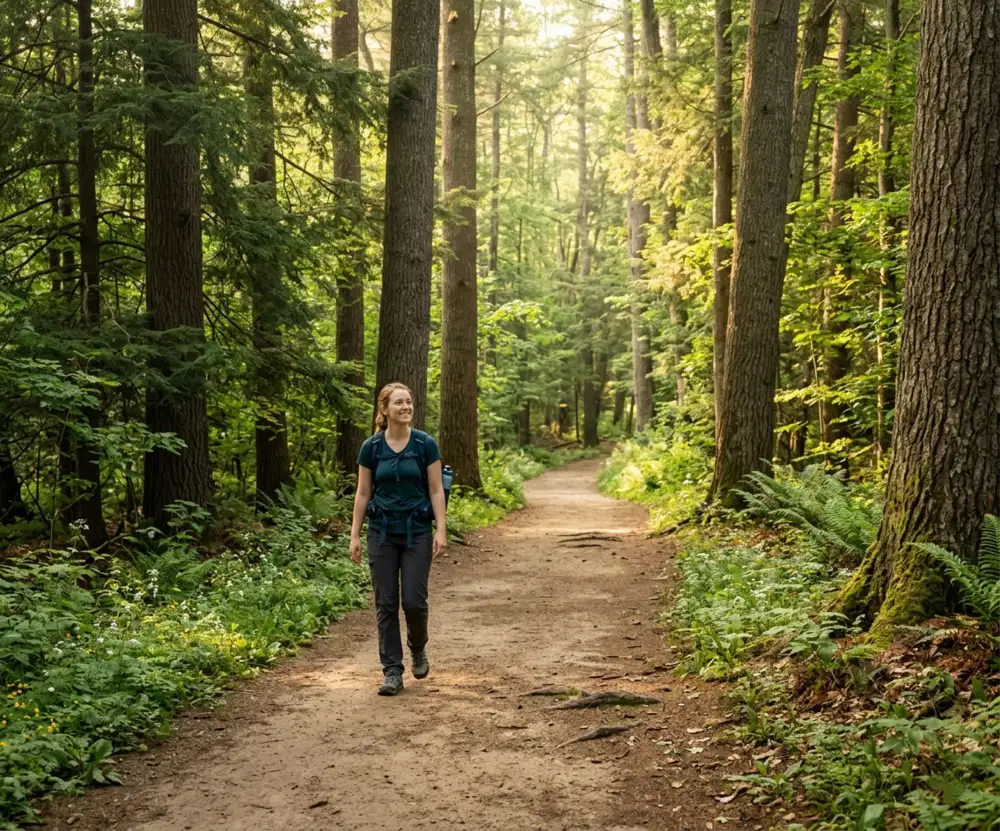
Beginner-friendly forest trails are hiking paths in wooded areas that remain easy to follow and comfortable for new hikers.
Most of these trails share a few simple features:
- Distance between 1 and 3 miles
- Gentle slopes with little elevation gain
- Clearly marked routes
- Smooth walking surfaces like packed dirt, gravel, or boardwalks
- Easy access from parking areas or visitor centers
Many national parks and state parks build these trails so visitors can explore nature safely. Agencies such as the U.S. National Park Service and U.S. Forest Service maintain them regularly to keep paths clear and safe.
Because of these features, beginners, families, and older adults often choose forest trails for their first hiking experience.
Why Forest Trails Are Perfect for Beginners
Forest trails offer several advantages that make hiking easier for people with little experience.
Natural Shade Keeps the Trail Comfortable
Tall trees form a canopy above the path. This canopy blocks strong sunlight and keeps the trail cooler.
The U.S. Forest Service notes that shaded forest areas can stay several degrees cooler than open land. This difference makes summer hikes more comfortable.
Clear Paths Reduce the Risk of Getting Lost
Many beginner trails include signs, maps, and loop routes. A loop trail begins and ends at the same point, so hikers return to the starting area without confusion.
Softer Ground Is Easier on Your Body
Forest paths often contain packed soil or pine needles. These surfaces absorb impact better than pavement or rocky terrain, which reduces strain on knees and ankles.
Health Benefits of Walking Forest Trails
Spending time in forests supports both physical and mental health.
Reduced Stress
A study published in Environmental Health and Preventive Medicine found that time spent in forests lowers cortisol levels, a hormone linked with stress.
In Japan, this practice is called forest bathing or Shinrin-yoku, which simply means spending quiet time among trees.
Improved Mood
Researchers from Stanford University found that walking in natural environments can reduce mental fatigue and negative thoughts.
Gentle Physical Activity
Walking remains one of the easiest forms of exercise. The Centers for Disease Control and Prevention (CDC) lists regular walking as an effective way to maintain heart health and general fitness.
How to Choose a Beginner Forest Trail
Many beginners struggle with selecting the right trail. A trail might look short on a map but still feel difficult.
Three factors help determine whether a trail suits beginners.
Distance
Look for trails between 1 and 3 miles round trip. This distance allows enough time to enjoy the forest without causing exhaustion.
Elevation Gain
Elevation gain shows how much climbing a trail includes. Beginner trails usually stay below 300 feet of elevation gain.
Trail Surface
Smooth surfaces are easier to walk on. Beginner-friendly surfaces include packed dirt, gravel paths, and wooden boardwalks.
Rocky or uneven terrain may increase difficulty even on short trails.
Beginner Forest Trails in the United States
The United States has many forest trails that welcome new hikers. These trails combine easy walking conditions with beautiful scenery.
Redwood National and State Parks – California
These parks protect some of the tallest trees on Earth.
The Lady Bird Johnson Grove Trail is a peaceful 1.5-mile loop surrounded by towering redwoods. The wide and clearly marked path makes it easy for beginners to follow.
Visitors often describe this trail as quiet and calming.
Source: National Park Service
Great Smoky Mountains National Park – Tennessee and North Carolina
The Laurel Falls Trail is one of the most popular beginner hikes in the park.
The trail leads through dense forest to a scenic waterfall. The paved path provides stable footing, which helps new hikers feel comfortable.
The full hike covers about 2.6 miles round trip.
Source: National Park Service
Olympic National Park – Washington
Inside the Hoh Rain Forest, the Hall of Mosses Trail offers one of the most unique forest walks in North America.
This 0.8-mile loop passes through trees covered with thick moss. Wooden boardwalks guide visitors through the rainforest ecosystem.
Source: National Park Service
Muir Woods National Monument – California
Muir Woods sits north of San Francisco and protects an old-growth redwood forest.
The Main Trail Loop follows Redwood Creek through massive redwood trees. Wooden boardwalks and smooth paths make walking simple for beginners.
Most visitors walk about 2 miles round trip.
Source: National Park Service
Congaree National Park – South Carolina
The Boardwalk Loop Trail in Congaree National Park provides one of the easiest forest walks in the country.
This 2.4-mile loop travels through an old-growth floodplain forest filled with bald cypress trees. Raised boardwalks protect the environment while giving visitors a stable footing.
Source: National Park Service
How to Prepare for Your First Forest Trail Walk
A little preparation helps make your first hike enjoyable.
Follow these steps:
- Check the trail difficulty and distance
- Download or print a trail map
- Bring water and light snacks
- Wear comfortable shoes and breathable clothing
- Start the hike early in the day
Morning hikes usually offer cooler temperatures and quieter trails.
Common Mistakes Beginners Make on Forest Trails
Many new hikers face the same problems during their first trips.
Choosing Trails That Are Too Long
A short distance may still take two hours depending on terrain and pace.
Wearing Brand-New Shoes
New shoes may cause blisters. Use shoes that feel comfortable before hiking.
Starting Late in the Day
Tree cover makes forests darker earlier than open areas.
Ignoring Weather Conditions
Rain can turn dirt trails slippery and difficult to walk.
Essential Gear for Beginner Hikers
You do not need expensive equipment to enjoy forest trails.
Basic items include:
- comfortable walking shoes
- water bottle
- small backpack
- sunscreen
- trail map or navigation app
Optional items include snacks, a light rain jacket, and a small first-aid kit.
Understanding Trail Difficulty Ratings
Trail difficulty usually depends on four factors:
Elevation Gain
Even short trails become harder if they include steep climbs.
Trail Grade
A gentle grade feels comfortable for beginners, while steep grades require more effort.
Terrain
Loose gravel, rocks, or tree roots increase difficulty.
Distance
Longer trails require more endurance even if they remain flat.
Trail apps such as AllTrails and official park websites often list these details. Understanding them helps beginners choose trails with confidence.
How to Find Beginner Forest Trails Near You
Several reliable tools help hikers locate beginner trails.
You can search using:
- National Park Service website
- U.S. Forest Service recreation pages
- state park websites
- hiking apps like AllTrails or Gaia GPS
These platforms show trail distance, elevation gain, and visitor reviews.
Look for trails labeled easy or family friendly.
Respect Nature While Hiking
Forests stay healthy when visitors follow responsible outdoor habits.
The Leave No Trace Center for Outdoor Ethics recommends:
- pack out all trash
- stay on marked trails
- avoid disturbing wildlife
- do not pick plants
These simple actions protect forests for future visitors.
Frequently Asked Questions
Are forest trails safe for beginners?
Yes. Many parks maintain beginner trails with clear signage and regular maintenance.
What distance is good for a first hike?
A trail between 1 and 3 miles round trip usually works well for beginners.
Do beginners need hiking boots?
No. Comfortable walking shoes with good grip are enough for easy forest trails.
Can children hike forest trails?
Yes. Many beginner trails are family friendly and suitable for children.
Conclusion
After spending years exploring forest trails and national parks, I have learned that the right trail can completely change how beginners feel about hiking. Many people assume hiking is difficult because they start with the wrong trail. Easy forest paths with shade, gentle terrain, and clear signs allow hikers to relax and enjoy the surroundings instead of worrying about distance or steep climbs. In my experience, some of the most memorable outdoor moments happen during simple forest walks rather than demanding hikes. When beginners start with the right trail and take their time, they often discover that hiking is far more enjoyable and accessible than they expected.
